When comparing Deel vs Remote in 2026, both platforms have emerged as dominant players in the global employer of record space. These platforms enable businesses to hire and manage employees across 100+ countries without establishing local entities. While both offer compliance, payroll, and onboarding solutions, they differ markedly in their approach. Deel operates through owned entities in 120+ countries with faster onboarding, whereas Remote emphasizes regulatory rigor and expanded benefits coverage. Pricing also varies considerably, with Deel EOR pricing set at $599 per employee per month compared to Remote’s $699 flat fee. In this guide, we’ll break down the Deel vs Remote EOR comparison in detail, covering features, costs, and helping you determine which Deel employer of record alternative fits your business needs.
Understanding Deel and Remote: Platform Overview
What is Deel EOR and How It Works
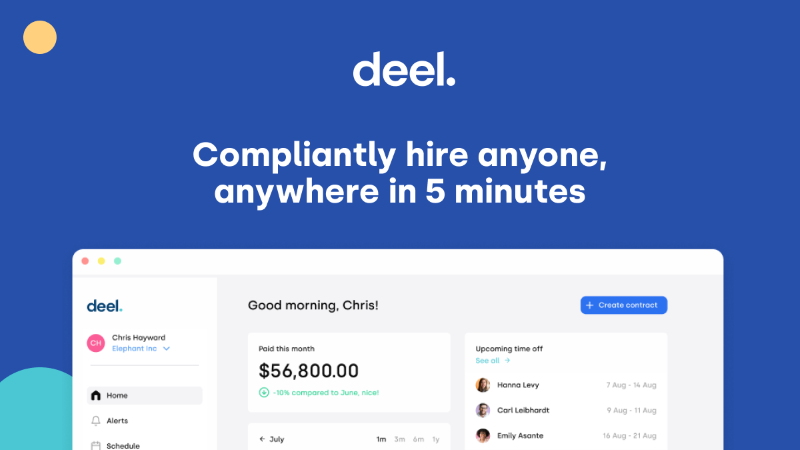
Deel functions as a global employment platform combining EOR, contractor management, global payroll, and HR administration into one system. The platform owns entities in 130+ countries and provides EOR services in 110+ countries, with contractor hiring available in 150+ locations. Deel handles employment contracts, payroll processing, tax filings, benefits administration, and compliance monitoring on behalf of client companies. The platform serves 37,000+ customers and processes over $20 billion in global payroll annually.
Deel’s infrastructure includes 200+ legal experts specialized in employment regulations and local statutory benefits by country. Companies using Deel can onboard employees in as little as 10 days for smaller teams.
What is Remote and Its Core Services
Remote operates as a compliance-focused EOR platform that owns wholly-owned entities in 100+ countries. The platform provides employer of record services in 90+ countries, with contractor management extending to 200+ countries and jurisdictions. Remote handles locally compliant employment contracts, benefits administration, global payroll processing, and dedicated HR and legal specialist support.
Remote’s mobile app reaches 194 countries and regions worldwide. The platform emphasizes intellectual property protections and a clean user experience, positioning itself around regulatory compliance and owned infrastructure rather than rapid market expansion.
Key Differences in Operating Models
Both platforms operate as own-entity EORs, meaning they directly employ workers rather than using third-party partners. However, entity accountability differs significantly. Deel maintains subsidiaries across 110+ countries but holds labor leasing licenses in fewer than 20% of entities. In contrast, Remote holds labor leasing licenses in around 50% of entities where legally required.
Country Coverage and Global Reach Comparison
Deel provides broader geographic coverage with presence in 150+ countries, whereas Remote operates in approximately 95 countries for EOR services. For contractor hiring specifically, Deel covers 150+ countries while Remote extends to 200+ jurisdictions.
Feature Comparison: Deel vs Remote
Both platforms deliver core EOR functionality but differ in their compliance infrastructure and service delivery models.
EOR Services: Employment and Legal Compliance
Deel relies on 200+ legal experts specialized in employment regulations, local statutory benefits, and tax laws by country. The platform monitors regulatory changes and flags risks through its Continuous Compliance system. Remote operates with local legal experts in 85+ countries and uses a Watchtower service that automatically updates systems when regulations change. Remote handles compliance through in-house local payroll teams who ensure payments align with local rules.
Payroll Processing and Payment Methods
Deel supports multiple funding methods including ACH, wire transfers, credit cards (2.9% + $0.30 for US/EU cards), and cryptocurrency options. Remote runs payroll in-house across 70+ countries without third-party providers, charging $50 per employee monthly for end-to-end payroll processing. Remote processes payments in local currencies using their FX rate and allows funding either as one payment or per currency.
Benefits Administration Across Countries
Remote integrates benefits directly within payroll systems and offers multiple tiers in most markets. The platform leverages relationships with global providers to secure large-group pricing. Deel centralizes benefits administration through its HRIS, supporting localized benefits tailored to each country, state, or region.
Contractor Management Capabilities
Deel charges $49 per active contractor monthly and provides eight withdrawal options, including Deel Card, Revolut, Wise, and crypto transfers in 120+ currencies. Remote prices contractor management at $29 per active contractor monthly with a 3.5% credit card processing fee. Both platforms offer compliant contracts, automated invoicing, and global payment processing.
HRIS and Platform Technology
Deel operates a comprehensive HRIS managing workforce across 150+ countries with org charts, job architecture, granular permissions, document management, and time-off policies. Remote launched its HRIS in 2025, designed specifically for remote-first teams operating across international borders.
Background Checks and Screening Services
Deel partners with Certn, offering checks in 190+ countries with 95% of results returned in minutes. Remote integrates with Veremark for background screening, offering education, employment, global sanctions, and criminal record checks with results typically within 24 hours.
Pricing Breakdown: Deel EOR vs Remote Costs
Deel EOR Pricing: $599/Employee/Month Details
Deel EOR pricing starts at $599 per employee monthly for standard service. The enterprise tier costs $899 per employee monthly. These platform fees exclude salaries, employer taxes, and statutory benefits, which add 13-40% on top of gross pay depending on the country. Deel requires a one-month gross salary deposit per employee, returned 30 days after offboarding. Country-specific surcharges of $50-$150 monthly apply in markets like Brazil, France, and India.
Remote Pricing Structure and Total Costs
Remote charges $599 per employee monthly on annual billing, or $699 on monthly billing. The pricing structure remains consistent across its 90+ EOR countries. Remote advertises zero onboarding or offboarding fees with its EOR service.
Contractor Pricing: $49 vs $29 per Month
Deel contractor management costs $49 per active contractor monthly. Remote charges $29 per contractor monthly for active contractors only. Remote’s Contractor Management Plus tier costs $99 monthly with misclassification protection coverage up to $100,000 per contractor.
Hidden Fees and Additional Service Costs
Besides platform fees, both providers charge payment processing costs. Remote applies a 3.5% credit card fee and a $5 bank transfer fee. Deel applies FX markups of 0.6-2% above mid-market rates on cross-currency payments. Credit card funding on Deel costs 2.9% + $0.30 for US/EU cards.
Cost Efficiency for Startups vs Enterprises
Volume discounts on Deel begin at 20+ employees, dropping rates to $400-$500 monthly. At 50+ headcount, negotiated rates fall to $350-$425 per employee monthly.
Making Your Choice: Which Platform to Select
When to Choose Deel for Your Business
Select Deel when speed matters most. Companies needing rapid market entry benefit from faster onboarding timelines and platform automation. Deel works well for businesses managing mixed workforces (employees and contractors) through one system, particularly with its $49 contractor pricing. The platform suits teams prioritizing self-service workflows over hands-on advisory support.
When Remote is the Better Option
Remote fits organizations prioritizing regulatory compliance depth and standardized benefits across countries. The platform appeals to fully distributed companies seeking equitable benefits packages. Remote’s owned-entity infrastructure in 50% of licensed markets provides stronger compliance backing.
Customer Support and Service Quality Comparison
Deel provides 24/7 chat support with response times averaging 1-5 minutes. The platform scores 92 out of 100 for customer satisfaction and resolves 85% of issues on first contact. Remote emphasizes structured support through automated processes with limited direct in-country assistance.
Onboarding Experience and Implementation Time
Effective onboarding typically requires three months minimum, though platforms compress this timeline. Deel onboards employees within days using automated workflows and Slack integration. Implementation speed varies based on workforce complexity and compliance requirements.
Alternative EOR Platforms Worth Considering
Besides Deel vs Remote, consider Safeguard Global (187+ countries), Papaya Global (payments-first infrastructure), Multiplier ($400/month EOR), and Velocity Global (185 countries with advisory services).
Comparison Table
Deel vs Remote: Comprehensive Comparison Table
| Feature/Attribute | Deel | Remote |
|---|---|---|
| Geographic Coverage | ||
| EOR Countries | 110+ countries | 90+ countries |
| Contractor Management | 150+ countries | 200+ countries and jurisdictions |
| Total Presence | 150+ countries | 95 countries (EOR) |
| Mobile App Reach | Not mentioned | 194 countries and regions |
| Pricing | ||
| EOR Standard Pricing | $599/employee/month | $599/month (annual billing) or $699/month (monthly billing) |
| EOR Enterprise Pricing | $899/employee/month | Not mentioned |
| Contractor Management | $49/active contractor/month | $29/active contractor/month |
| Contractor Management Plus | Not mentioned | $99/month (with $100K misclassification protection) |
| Onboarding/Offboarding Fees | One-month gross salary deposit (returned after 30 days) | Zero fees |
| Volume Discounts (20+ employees) | $400-$500/month | Not mentioned |
| Volume Discounts (50+ employees) | $350-$425/month | Not mentioned |
| Additional Costs | ||
| Country-Specific Surcharges | $50-$150/month (Brazil, France, India, etc.) | Not mentioned |
| Credit Card Processing Fee | 2.9% + $0.30 (US/EU cards) | 3.5% |
| Bank Transfer Fee | Not mentioned | $5 |
| FX Markup | 0.6-2% above mid-market rates | Uses their own FX rate |
| Employer Taxes & Benefits | 13-40% on top of gross pay | Not mentioned (included in service) |
| Compliance & Legal | ||
| Legal Experts | 200+ specialized in employment regulations | Local legal experts in 85+ countries |
| Entity Ownership | Owned entities in 130+ countries | Wholly-owned entities in 100+ countries |
| Labor Leasing Licenses | Fewer than 20% of entities | Around 50% of entities where legally required |
| Compliance Monitoring | Continuous Compliance system | Watchtower service (auto-updates) |
| Payroll | ||
| In-House Payroll Countries | Not specified | 70+ countries (no third-party providers) |
| Payroll Processing Fee | Included in EOR pricing | $50/employee/month (standalone service) |
| Payment Methods | ACH, wire transfers, credit cards, cryptocurrency | Local currencies, one payment or per currency |
| Payment Currencies | 120+ currencies | Local currencies |
| Withdrawal Options | 8 options (Deel Card, Revolut, Wise, crypto) | Not specified |
| Benefits Administration | ||
| Benefits Integration | Centralized through HRIS, localized by country/region | Integrated within payroll, multiple tiers in most markets |
| Benefits Pricing | Not specified | Leverages global providers for large-group pricing |
| Technology & Platform | ||
| HRIS Features | Comprehensive (org charts, job architecture, permissions, document management, time-off) | Launched in 2025, designed for remote-first teams |
| Countries Managed in HRIS | 150+ countries | International borders (specific number not mentioned) |
| Platform Integration | Slack integration | Not specified |
| Background Checks | ||
| Partner | Certn | Veremark |
| Countries Covered | 190+ countries | Not specified |
| Results Turnaround | 95% returned in minutes | Typically within 24 hours |
| Check Types | Not specified | Education, employment, global sanctions, criminal records |
| Customer Support | ||
| Support Availability | 24/7 chat support | Structured support through automated processes |
| Response Time | 1-5 minutes average | Not specified |
| First Contact Resolution | 85% | Not specified |
| Customer Satisfaction Score | 92 out of 100 | Not specified |
| Implementation | ||
| Onboarding Speed | As little as 10 days (smaller teams); within days using automated workflows | Not specified (standard 3 months minimum typical) |
| Service Model | Self-service workflows, platform automation | Regulatory compliance depth, limited direct in-country assistance |
| Company Stats | ||
| Customers Served | 37,000+ | Not mentioned |
| Annual Payroll Processed | $20+ billion | Not mentioned |
Conclusion
Both platforms deliver strong EOR services, but your choice depends on priorities. Deel wins on speed and contractor flexibility at $599 monthly, especially for mixed workforces. Remote excels in compliance rigor with 50% licensed entities and standardized benefits, equally important for distributed teams prioritizing regulatory depth. Pricing sits neck-and-neck at the standard tier. Under those circumstances, evaluate your workforce structure and compliance requirements before committing.